
 Helpful Posts:
 For those who don't know what that is, it's a setting of the cameras custom WB such that there is effectively no WB effect on the camera preview image. Which, in turn, means that the camera histogram is not lying to you, allowing you to expose to the right with confidence
Here's a good description and how to do it (caution: dcraw needed).
http://www.guillermoluijk.com/tutori...b/index_en.htm
It's of special interest to me because the raw-only Sigma SD9 is neither noted for its dynamic range, nor for its noise performance. So, by using UniWB, more trons in the sensor wells is a good thing.
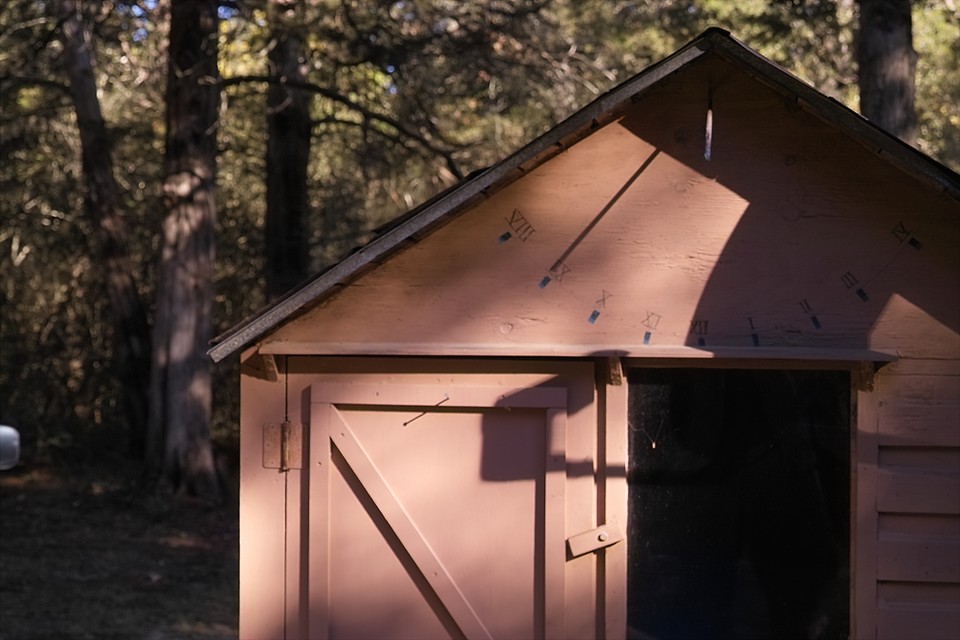
The procedure to get a UniWB custom setting in your camera is not for the faint-hearted. But the result, for me, is worth it for those important shots like, for example, my real-world well-house:
Note the (for SD9) lack of noise in the shadows. No noise reduction applied other than the raw converter unavoidable default; and a tiny highlight reduction (-0.2, Sigma Photo Pro) got the highlights just right. By coincidence, 10 am Local Solar Time provided perfect light, no WB needed.
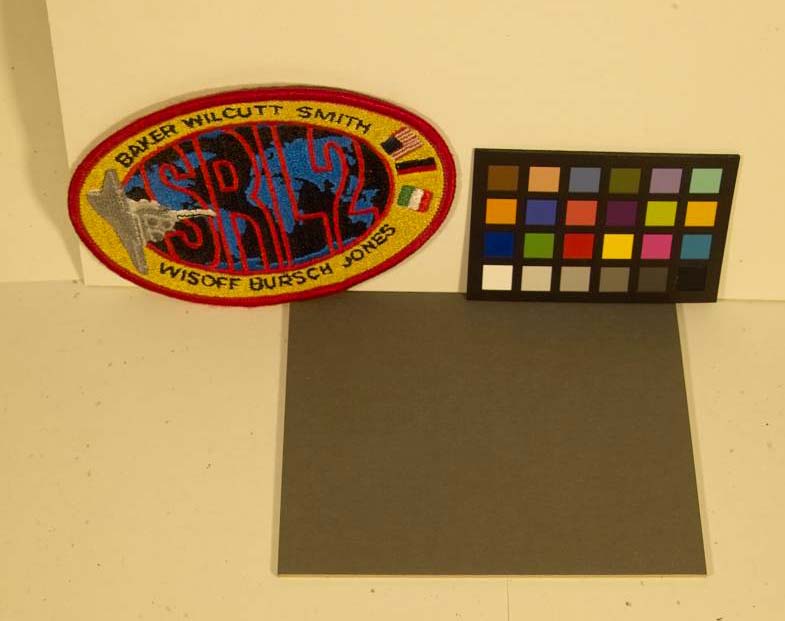
My latest LED floods, however, are a different matter:
That's a Kodak White Card behind the Macbeth! No "LED blue peak" there! However, I could have got more DR in that shot (it's just a fr'instance) and, of course, the white balance can be corrected easily and controllably in post.
Results 1 to 16 of 16
-
2nd November 2013, 01:01 PM #1

- Join Date
- Feb 2012
- Location
- Texas
- Posts
- 6,956
- Real Name
- Ted
Do any raw-shooters here use UniWB?
Last edited by xpatUSA; 2nd November 2013 at 01:23 PM. Reason: steel cain't hardly wraht good English
-
2nd November 2013, 05:05 PM #2

- Join Date
- Sep 2010
- Location
- Victoria BC
- Posts
- 1,510
Re: Do any raw-shooters here use UniWB?
Ted:
WOW. Thank you very much for this post.
I've been following Guillermo's writings and website since I started using digital - he seems to me to be on the leading edge of ideas in digital.
This is fascinating and for me very useful as I shoot exclusively with RAW and and try to use ETTR as much as I can.
I've been setting contrast to minus two or minus three to get the in-camera JPEG to more accurately reflect the actual RAW results, so this seems like a major development. And I really don't care one hoot what the LCD image looks like as long as I can achieve ETTR.
For those that do use the LCD, this method would be very distracting.
I sincerely hope that anyone that doesn't subscribe to ETTR will just ignore this thread alone for those of us that are interested in ETTR - there have already been some nasty situations on the topic.
Glenn
-
2nd November 2013, 07:02 PM #3
- Join Date
- Feb 2012
- Location
- Texas
- Posts
- 6,956
- Real Name
- Ted
Re: Do any raw-shooters here use UniWB?
Thanks, Glenn. I share your sentiment with the fond hope that the thread will remain of interest to some, and not devolve into a "correct exposure" bash-out! Originally Posted by Glenn NK

-
2nd November 2013, 08:05 PM #4
- Join Date
- Dec 2011
- Location
- WA
- Posts
- 34
- Real Name
- Shane
Re: Do any raw-shooters here use UniWB?
I have been using UniWB since 2006 when I got my first DSLR Nikon D70. Since then I have used it for D200visible, D200IR830 and my D200UVIR, D300S and D700. I have typically uploaded a linear and an inverse tone curve to use in conjunction with UniWB as it helps produce a more accurate "RAW" histogram than a jpg histogram. The inverse is tricky to use and I have basically discontinued using it in favor of a linear tone curve. Using the UniWB and Linear tone curve in conjunction with appropriately zeroed out jpg enhancements such as contrast, sharpening etc my histogram is pretty reliable. It is possible to tweak/fine tune the histogram and highlight indicators using the jpg enhancements if required.
-
2nd November 2013, 10:00 PM #5

- Join Date
- Sep 2012
- Location
- Nomadic but not homeless, ex N.Z. now Aust.
- Posts
- 4,167
- Real Name
- Paul

Re: Do any raw-shooters here use UniWB?
Very interesting, but the camera I use has a high dynamic range therefore an increase of up to 1.3 ev of potential exposure gain is for me not as important as the insurance it offers against channel saturation. The most benefit theoretically would be at high ISO settings where the dynamic range is reduced. However I only use high ISO when I have the aperture wide open and need the additional ISO to try and achieve a shutter speed suitable either for being hand held or the subject movement. In both cases the ability to reduce possible noise by increasing exposure (ETTR approach) is of minor importance. Under these conditions to retain the shutter speed required the only option for increasing exposure would be to up the ISO even more which seems counter productive. (It would be interesting to see a study testing to see if pushing the ISO to achieve ETTR had any advantages) Originally Posted by xpatUSA
I note you mention the inherent low dynamic range and noise of your SD9 so the potential benefit may be well worth the effort and sacrifice in convenience.
Thanks for the link as it at least gives additional background information for me to make a more informed assessment of what is the most appropriate approach for the camera I use and type of photography I do. If we do not know the options it is impossible to make a valid choice.
-
3rd November 2013, 01:38 PM #6


- Join Date
- Dec 2011
- Location
- New England
- Posts
- 9,344
- Real Name
- Dan
Do any raw-shooters here use UniWB?
Interesting, but how much does it matter In practice?
I shoot only raw and set my picture style to neutral or faithful with -2 contrast to get a more reasonable histogram. I also display all three histograms and generally ETTR for the highest of the three. My question is: if I did all of this, how often would I end up with a substantially different exposure?
-
3rd November 2013, 04:06 PM #7
- Join Date
- Dec 2011
- Location
- WA
- Posts
- 34
- Real Name
- Shane
Re: Do any raw-shooters here use UniWB?
As a followup to my earlier post I thought I should provide some background on why I use UniWB.
If you shoot a subject that is invisible to you and confuses the camera meter then, the only way to determine if your exposure is correct is through the histogram. Unfortunately the histogram is based on a jpg rendition after WB, tone curve, colour space and any "picture" adjustments" have been applied. In other words it is definitely not representative of true RAW data or saturation status. The most detrimental components of this process are the application of WB and tone curve.
My journey into UniWB began with this problem because I shoot reflected ultraviolet and infrared. Initially I was plagued with underexposed or overexposed images. Anyone who has looked at the RGB transmission curves for a digital camera will know that the red bayer dye can also transmit some blue and green, the green dye can transmit some red and blue, and the blue dye some green and IR. Well, in the infrared and ultraviolet the RGB dyes react differently depending on the wavelength.
For instance (based on Nikon bayer dyes), ultraviolet between 390-400nm predominately falls into the blue channel, but UV below 390nm falls into the red channel. For infrared, as the wavelengths become longer, typically around 830nm, the RGB dyes all become nearly equally transparent, with the red being slightly dominant. For those shooting with extended IR or colour IR modified cameras or filters, the red channel is significantly dominant over the other two channels. Throw in a jpg rendered histogram and camera WB, makes getting the correct exposure a challenge. This led me to adopt UniWB with a linear tone curve. Now my histogram is a much truer representation of the status of the RAW RGB data and I can determine if my IR or UV exposure is correct based on the histogram. With regards to DR, I should point out that I have yet to exceed the DR of the DSLR when shooting 830nm IR in midday sun, so pushing the exposure to the right is also important in this situation.
I quickly realized that this method could benefit my visible photography and would reduce the hard work of trying to use two methodologies. I don't shoot fashion or portraits, just nature, so I need a WB that is suitable to the image content and not "perfect" for advertising or such. So I import my RAW UniWB image into the RAW developer and then adjust WB to suit the image content. With these implementations, I do practice ETTR much of the time even though the DSLR may have sufficient DR without it. This not only provides me with the benefits of less image noise but keeps methodology consistent with my IR and UV photography.
-
3rd November 2013, 07:09 PM #8
- Join Date
- Sep 2012
- Location
- Nomadic but not homeless, ex N.Z. now Aust.
- Posts
- 4,167
- Real Name
- Paul
Re: Do any raw-shooters here use UniWB?
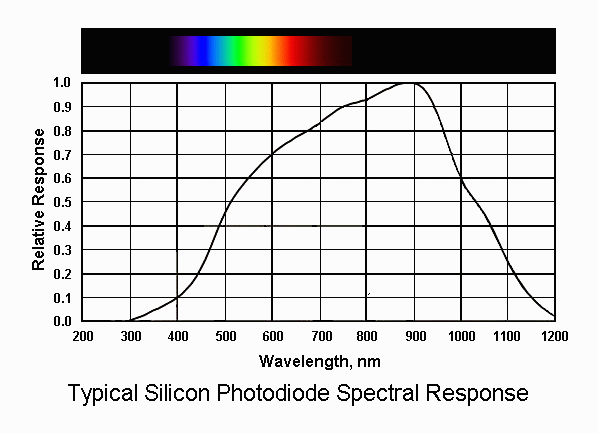
t6b9p you did not mention that not only are you having to compensate for the bayer dyes but also the sensors inherent spectral response. It is no surprise that UniWB is an important method for your exposure assessment and also accurate colour rendition is basically irrelevant. Looking at the sensors high sensitivity to IR I can only assume you are filtering out most the visible wavelengths and the exposure is based solely on the IR component. Be interesting to see some of your photographs.
Last edited by pnodrog; 3rd November 2013 at 07:15 PM.
-
3rd November 2013, 07:38 PM #9
- Join Date
- Dec 2011
- Location
- WA
- Posts
- 34
- Real Name
- Shane
Re: Do any raw-shooters here use UniWB?
Well yes for the IR photography, but I also use it for reflected UV where I would exclude visible and IR components. In addition, I found the method quite useful for my "normal" visible light photography.I can only assume you are filtering out most the visible wavelengths and the exposure is based solely on the IR component.
My old website http://www.beyondvisible.com/ was primarily focused on reflected UV from a technical approach (in other words - no "pretty" pictures) and is probably 5 years overdue for the update which is currently in progress. The new site will include nature/landscape visible & IR images once the update is complete.
-
3rd November 2013, 07:47 PM #10
- Join Date
- Sep 2012
- Location
- Nomadic but not homeless, ex N.Z. now Aust.
- Posts
- 4,167
- Real Name
- Paul
Re: Do any raw-shooters here use UniWB?
Thank you for the link. Always interesting to understand a bit more about the reasons that a particular approach has been adopted. Only had a quick glance but I will be going back for a better look. Originally Posted by t6b9p
-
4th November 2013, 06:40 AM #11
- Join Date
- Feb 2012
- Location
- Texas
- Posts
- 6,956
- Real Name
- Ted
Re: Do any raw-shooters here use UniWB?
Not sure who Dan is addressing, but here is my 2cts worth:
Judging by the responses so far, it appears to matter quite a lot in the practice of others than your goodself. Originally Posted by DanK
Can't really comment much because my camera has no such settings as 'neutral', 'faithful', 'contrast' and it only has one histogram which does, however, show the three channels. I suppose going to those lengths to get a 'reasonable histogram' does have a purpose that is similar to that of UniWB.I shoot only raw and set my picture style to neutral or faithful with -2 contrast to get a more reasonable histogram. I also display all three histograms and generally ETTR for the highest of the three. My question is: if I did all of this, how often would I end up with a substantially different exposure?
Today, I've been shooting various LED lamps through my spectroscope. Not really off-topic. What is the correct WB setting for a lamp spectrum as it exits from the diffraction grating? No other lights are on, no handy-dandy gray card in the scene. Hmmmm . . . no "LED" selection in the WB menu . . dilemma, dilemma. At one time, I used to take the easy way out and set ACR to precisely 6504K and a smidge of tint trying for D65, seeing as the image was going to be sRGB.
But now, I have no hesitation at all in selecting "Custom" (UniWB) and letting 'er rip
Last edited by xpatUSA; 4th November 2013 at 07:09 PM.
-
4th November 2013, 07:27 AM #12
- Join Date
- Dec 2011
- Location
- WA
- Posts
- 34
- Real Name
- Shane
Re: Do any raw-shooters here use UniWB?
The light from an LED is result of luminescence and is therefore an emission subject and not a reflectance subject. I shot various forms of luminescence using slide film for decades and the rule was always use daylight balanced slide film. However, it often needed tweaking due to colour balance, excitation & emission filters issues and quite often reciprocity. When I switched to digital I started using the Daylight WB setting but this also required tweaking in the RAW processor. When I switched to UniWB I just fired away tethered and adjusted WB immediately in the RAW processor to match my subject as close as possible.What is the correct WB setting for a lamp spectrum as it exits from the diffraction grating?
It will vary depending on subject matter and lighting. However, the settings you are adjusting have minimal effect in comparison to using UniWB.if I did all of this, how often would I end up with a substantially different exposure?
-
4th November 2013, 04:58 PM #13
- Join Date
- Feb 2012
- Location
- Texas
- Posts
- 6,956
- Real Name
- Ted
Re: Do any raw-shooters here use UniWB?
Yes, it was really a rhetorical question. I asked that same question in a different form elsewhere, long ago: "What is the correct WB setting for a watch lume shot?" (in total darkness of course). The luminaries (!) there had no proper answer and side-tracked quite a lot. So I changed "watch lume" to "traffic light", but still nothing was concluded! Originally Posted by t6b9p
A related question for you. I'm helping someone who's into UV photography and he seems to expect that monotonic violet, say @440nm, should appear in a rendered image as violet (ignoring WB for the moment). Is that a reasonable expectation?
I'm awaiting a Sigma SD10 as we speak and intend to remove the pass-band filter (a.k.a dust cover) and shoot my UV lamp via tracing paper through a diffraction grating. (puh-lease don't educate me about the Foveon spectral response, I have graphs and papers galore on all things Foveon)Last edited by xpatUSA; 4th November 2013 at 07:11 PM.
-
4th November 2013, 07:36 PM #14
- Join Date
- Dec 2011
- Location
- WA
- Posts
- 34
- Real Name
- Shane
Re: Do any raw-shooters here use UniWB?
There are way too many unknown variables to answer that question.I'm helping someone who's into UV photography and he seems to expect that monotonic violet, say @440nm, should appear in a rendered image as violet (ignoring WB for the moment). Is that a reasonable expectation?
At the risk of violating your request. I can tell you that I had high hopes for the SD-10 as a UV camera. So much so that I purchased one of the first available SD-Nikon F adapters (and never used it). I tested an SD-10 in 2008 by removing the internal filter and using a UV-Nikkor 105/4.5. The camera functions for UV but overall the results were quite disappointing due to noise. Further UV testing was carried out and the Foveon sensor was deemed a poor UV performer with respect to Nikon 2D sensor arrays. You can see some initial results using Spectralon reference standards here http://nikongear.com/live/index.php?...n-cmos-sensor/.I'm awaiting a Sigma SD10 as we speak and intend to remove the pass-band filter (a.k.a dust cover) and shoot my UV lamp via tracing paper through a diffraction grating. (puh-lease don't educate me about the Foveon spectral response, I have graphs and papers galore on all things Foveon)
Unfortunately I can't find the followup test results from 5 years ago which put the nail in the coffin. Ideally I want a Foveon sensor with 5 pixel wells, UV, B, G, R, IR and some decent on-board processing to reduce noise issues..
-
4th November 2013, 09:44 PM #15
- Join Date
- Feb 2012
- Location
- Texas
- Posts
- 6,956
- Real Name
- Ted
Re: Do any raw-shooters here use UniWB?
Thanks for the further info, my request certainly not violated. Wasn't aware of the UV-Nikkor - quartz glass? The situation has improved a bit since 2008 with RawDigger now able to open X3F files, show raw histograms and export just the 'blue' channel as a TIFF. I say 'blue' because, as you know, the channel has a much broader spectral response than the equivalent Bayer. Couldn't open your images, Nikon has them protected against casual observers - but I've seen plenty of noisy Sigma shots (all mine), so no great loss ;-). Originally Posted by t6b9p
Yes, I have seen a 4-layer photodiode intended for colorimetry, only one cell though - very poor spatial resolution. Foveon layer three is pretty good for near IR, I think. What were you looking for in that regard? The SD10 sensor has microlenses. They could well attenuate UV depending on the material, I suppose - leaving you with the famous Foveon noise . . . .Unfortunately I can't find the followup test results from 5 years ago which put the nail in the coffin. Ideally I want a Foveon sensor with 5 pixel wells, UV, B, G, R, IR and some decent on-board processing to reduce noise issues..
-
5th November 2013, 12:59 AM #16
- Join Date
- Dec 2011
- Location
- WA
- Posts
- 34
- Real Name
- Shane
Re: Do any raw-shooters here use UniWB?
Back in 2008 I think I used a program called x3f.exe, can't remember now if dcraw could handle those files at that time.
The UV-Nikkor 105/4.5 is a quartz fluorite construction lens.
I did try the SD-10 for IR and found that a little disappointing too as my Nikon D200IR830 produced much better images. Noise was again one of the prime issues.
Sorry, I forgot Nikongear requires registration to view posts. The important point was that despite using UV light below 400nm for the image, the histogram showed data in blue as well as a little in the green channel.

 Reply With Quote