
I also have a question about pixel size. If the sensors on two cameras are the same size and one has more pixels than the other, the one with the larger number of pixels has to have smaller pixels. If they are smaller then the magnification has to be higher to get the same size print. Right? So why do we want more pixels? Of course, we always wanted finer grain film. When I wanted really big enlargements, I used finer grain films. It seemed to work but I never really compared the same shot done with Tri-X and Panatomic X (wasn't that the name of the fine grain B&W film?)
Thank you.
Bill.
 Helpful Posts: 0
Results 1 to 5 of 5
Thread: Pixel query
-
25th October 2009, 12:06 PM #1


- Join Date
- Jan 2009
- Location
- McAllen, Texas
- Posts
- 18
Pixel query
Last edited by Dave Humphries; 25th October 2009 at 06:00 PM.
-
25th October 2009, 04:46 PM #2
- Join Date
- Oct 2009
- Location
- USA - California
- Posts
- 445
Re: Pixel Size
Bill you might consider starting a new thread for that question -- you're going to get a lot of responses :P
-
25th October 2009, 06:01 PM #3Moderator

- Join Date
- May 2008
- Location
- Windsor, Berks, UK
- Posts
- 16,739
- Real Name
- Dave Humphries :)
Re: Pixel Size
Hi Kent,
Thanks for the wake up call there
I saw it earlier and didn't realise
Moved (as you can see)
-
25th October 2009, 07:18 PM #4
- Join Date
- Oct 2009
- Location
- USA - California
- Posts
- 445
Re: Pixel Size
Bill,
I'll get this started There are many, many, many things that go into how useful the extra megapixels on a camera are. One of the biggest deciding factors is the camera itsself - what size sensor it has. When the sensor is factored into the equasion, things get very complex, and ultimatly it boils down to what you want to use the camera for.
Yes. We refer to this as pixel density.If the sensors on two cameras are the same size and one has more pixels than the other, the one with the larger number of pixels has to have smaller pixels.
No. If two images are printed at the same size, and one has more megapixels (hence a higher DPI in this case), the magnification would be less, not more.If they are smaller then the magnification has to be higher to get the same size print.
Assuming the sensor sizes are the same between two different cameras, but one has a higher MP rating, here are the basic advantages/disadvantages:
Advantages for the camera that has fewer megapixels:
1. The pixel site (the area on the sensor that represents the pixel) is larger. This allows more light to be collected in it. This will give you two benifits: Better performanace is low light, and less noise. (Note: A higher MP image that is downsampled has the accuracy advantage, so this almost cancels itsself out)
Advantages for the camera that has more megapixels:
1. Larger prints. Please note that this will inevitably start a discussion over "how large of prints" or similar. You can get fairly large prints with not too many megapixels.
2. Accuracy. When you downsize an image to your final print size or to web resolutions, the more information that is avaliable the more accurate the final composite pixel becomes. The accuracy difference is minimal - but it is there. It is most effective for reducing noise (though not a noise reduction technique!)
3. Cropping power. You will be able to crop your images much more agressivly with a higher pixel count in the source image. This again factors into print size.
Hope this helps Everyone please chime in if I forgot something.
-
25th October 2009, 09:19 PM #5
- Join Date
- Dec 2008
- Location
- New Zealand
- Posts
- 17,660
- Real Name
- Have a guess :)
Re: Pixel query
Not necessarily - the pixels on the camera with the lower MP count could well be older technology with large gaps between between the pixels (but the pixels themselved might be the same size. Originally Posted by BillTexas

In reality, once you get past about 8MP it doesn't make much difference because for normal people (that excludes us photographers!) as the print size increases, so does the viewing distance - hence the reason I have 21MP shots and 8MP shots hanging 33" high on my gallery wall and you can't tell the difference between them.
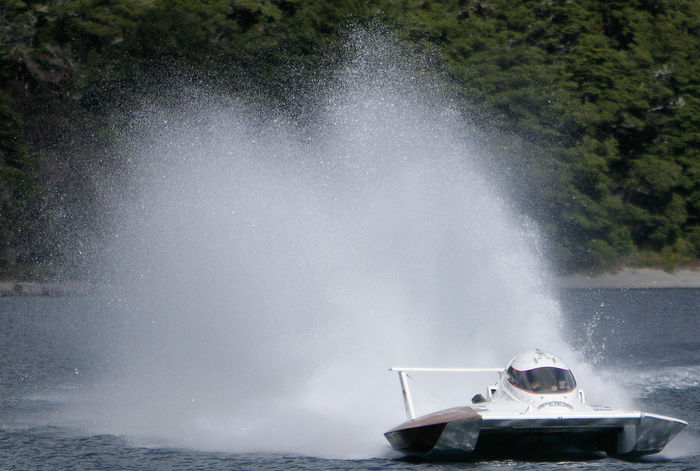
The nice thing about higher MP counts (for me anyway) is that you can get far more agressive with cropping (as in these two examples that I gave the other day); the first is the whole scene, and the 2nd a 100% crop ...


 Reply With Quote