
I find it difficult to determine the best exposure compensation setting required for a specific scene. For example, is +1/3 EC good enough? should I go +2/3 instead? or even +1? and how about +1/2?
Are there any guidelines for this matter? or is it purely based on the photographer's experience?
 Helpful Posts: 0
Results 1 to 8 of 8
-
16th May 2008, 06:57 AM #1

- Join Date
- May 2008
- Posts
- 17
Best Exposure Compensation (EC) Settings
-
16th May 2008, 05:05 PM #2Administrator
- Join Date
- Apr 2008
- Location
- California, USA
- Posts
- 1,473
- Real Name
- Sean
Re: Best Exposure Compensation (EC) Settings
I wish there were a simple one size fits all answer to the best exposure compensation (EC) settings.
For me, exposure compensation is perhaps most useful in situations where one is taking a series of shots under similar lighting conditions. Based on histogram results from the first photo, one can dial in a compensation that will ensure that the rest of the photos turn out just right. This is particularly useful for certain indoor events where you want to set a mood, and/or where there is an overabundance of light/dark (such as a tuxedo shoot at a wedding with the grooms, or bride's maid shoot which frequently has a lot of white dresses). Other situations include photos at a white sand beach, in the snow, near dark rocks, etc.
Perhaps what you were hoping for here is how to use exposure compensation *in anticipation* of your first photo. The simple answer here is that if you can, always take a test shot first. For those situations where this is not possible, the best EC setting unfortunately really just comes from experience. Many types of scenes have their own rule of thumb, and photographers accumulate these over the years in their mental catalog of settings. There are a few clear-cut examples though, with snow photos or shots at the beach being perhaps the most common.
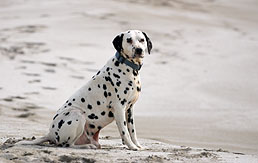

examples of situations which required positive exposure compensation
Even before my first snow shot, for example, I dial in at least +2/3 EC because I know the camera's metering system will grossly underexpose-- I just don't quite know by how much. I of course later may need to increase this EC amount, but at least it prevents the first photo from being unrecoverable. Again, I think this is the key: take a quick test shot under the same lighting/composition to get an accurate estimate of the amount of exposure compensation that is needed. This will work in 95% of situations, and will really improve similar subsequent photos.
Another time I have found EC useful is when I want to err on the side of caution with my exposure. If I am shooting in RAW mode, sometimes it's OK to underexpose a little if it assures me that none of my shots will have any blown highlights. Situations with fast-changing and unpredictable light are best-suited for this precautionary EC technique.

situation with fast-changing, unpredictable light where negative exposure compensation was helpful
There's a little more on this EC topic on this site's tutorial about camera metering & exposure, with exposure compensation specifically addressed some at the end...
-
17th May 2008, 08:13 PM #3
- Join Date
- May 2008
- Location
- Blyth, Northumberland, NE England
- Posts
- 25
Re: Best Exposure Compensation (EC) Settings
Another point to bear in mind is the significant effect that the choice of metering mode has on the end result.
I'm a bird photographer, and if I'm using spot metering on a white part of a dark bird I will get a completely different exposure than I would get if I'd metered on a dark part of the same bird, and will therefore need to make completely different EC adjustments.
Obvious I know, but it catches so many people out - I've lost count of the number of "what happened to the exposure between these two shots?" questions I've seen that can be explained by the fact that one shot metered on a dark part, and the next metered on a pale area.
But this wouldn't happen if the photographer had been using Evaluative metering, for example...
The point being, there are far too many variables to take into consideration to allow anyone to suggest a "one-size-fits-all" EC value - especially when we don't know what is being photographed, and in what lighting conditions - but a general understanding of exposure and metering, as found on this site, will go a long way.
Something else which might help is reading about the Sunny 16 rule...Last edited by Keith Reeder; 17th May 2008 at 08:18 PM.
-
24th May 2008, 12:44 PM #4New Member
- Join Date
- May 2008
- Posts
- 2
Re: Best Exposure Compensation (EC) Settings
i want to know that under good lighting conditions
should we use + or - ev compensation
-
24th May 2008, 06:45 PM #5

- Join Date
- May 2008
- Location
- Setubal - Portugal
- Posts
- 5,034
- Real Name
- António Correia
Re: Best Exposure Compensation (EC) Settings
And never forget the histogram:
"Expose to the right and to the light"
-
25th May 2008, 10:42 AM #6

- Join Date
- Apr 2008
- Location
- London
- Posts
- 1,502
- Real Name
- Ian
Re: Best Exposure Compensation (EC) Settings
That sunny 16 rule on wiki, reminds me of the days when film packaging always contained this sort of thing on the box or in the instructions.
Equally the metering issue is one where we have become somewhat lazy with the camera doing it all for us. At one time a light meter was essential or you just guessed/used experience to get the exposure right.
I am lucky to have a camera that allows a number of different metering modes, but even then there are situations where a meter would assist. It can make a huge difference on where you set the meter and of course the difference between having a good result or not.
Of course bracketing exposures was the way it was done in the past and again there are situations where bracketing is still essential.
What I am getting at is that in todays age, a lot of what was essential knowledge 30 years ago has been superceded by technological development, but having that basic photographic knowledge, is still in my view, essential to getting good pictures, coupled with Photoshop skills replacing the darkroom craft.
-
1st June 2008, 01:19 PM #7
- Join Date
- May 2008
- Location
- Blyth, Northumberland, NE England
- Posts
- 25
Re: Best Exposure Compensation (EC) Settings
True - and at one time we all rode to our jobs in the fields on horseback! Originally Posted by shreds


I don't really agree that relying mainly on the camera's metering is "lazy" - it's the current "state of the art" in photography, and making use of what the camera can do (and - lets be honest about this - usually do very well) is not a cop-out to my mind, as long as you also know when and how to intervene - and that's really just a matter of experience that we will all acquire as part of the learning process as long as we're prepared to learn.
Don't forget that many of us never shot film/manual/hand-held meters, and so while it's important to know exposure theory, it's maybe a little unfair to suggest that making full use of the available technology is in some way a negative thing, especially when it's all some of us have ever known.Last edited by Keith Reeder; 1st June 2008 at 01:21 PM.
-
4th June 2008, 06:58 AM #8
- Join Date
- May 2008
- Location
- Vanvouver Island, BC
- Posts
- 70
Re: Best Exposure Compensation (EC) Settings
I don't know that relying mainly on the meter is lazy, but isn't good practice. A photographer needs to develop an understanding of exposure, and how his/her camera works, and be able to look at a scene and estimate in advance what sort of exposure issues there are. When I am taking photographs (as opposed to snapshots) I will always estimate the exposure first, and then see what the meter is telling me. If it is a complicated scene, ie lots of heavy shadows, then I'll try different metering modes. Originally Posted by Keith Reeder
As has been said, there is no "one size fits all" answer to EC, although for most situations I find either 1/3 or 1/2 stop adequate.

 Reply With Quote