
 Helpful Posts:
 I don't understand the technologies and merits behind these two autofocus (AF) modes, but I noticed a few camera manufacturers (Canon, Olympus, ..) have added Contrast Detection AF in their new models of DSLR. Does this imply that Contrast Detection is a newer technology and superior to Phase Detection AF?
Results 1 to 14 of 14
-
14th May 2008, 02:28 AM #1

- Join Date
- May 2008
- Posts
- 17
Phase Detection vs Contrast Detection Autofocus (AF)
-
14th May 2008, 04:07 PM #2

- Join Date
- May 2008
- Location
- Calgary, Canada
- Posts
- 241
Re: Phase Detection vs Contrast Detection Autofocus (AF)
To my understanding Phase detection is faster and more accurate but it requires the mirror down which means it will block the sensor.
Contrast detection is useful for live view. At this time it is slower but face detection can be programmed in to the computer.
-
14th May 2008, 05:58 PM #3Administrator
- Join Date
- Apr 2008
- Location
- California, USA
- Posts
- 1,473
- Real Name
- Sean
Re: Phase Detection vs Contrast Detection Autofocus (AF)
Phase Detection Autofocus
This AF method is most prevalent in digital SLR cameras. It requires dedicated hardware (line and cross-type autofocus sensors) which can increase the overall cost of a camera. Phase detection AF still uses contrast to assess where to focus, but contrast just isn't used as iteratively or throughout the image...only at the autofocus sensors. A disadvantage with the phase detection method is that it requires pre-calibration, and can therefore always misfocus if incorrectly calibrated.
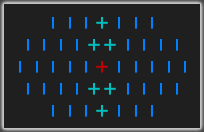
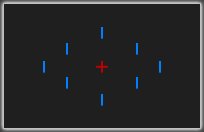
Examples of phase detection AF sensor arrays
left: higher-end digital SLR (Canon 1-series) , right: midrange digital SLR (Canon 30D/40D/etc)
Contrast Detection Autofocus
This AF method is most prevalent in compact cameras and newer SLR cameras with Live View. This is because these cameras can be made less expensive by using the sensor itself to perform autofocus, with the (relatively) cheaper processing power used to determine maximal contrast. A disadvantage to contrast AF is that it cannot gauge whether the camera lens is front or back focused-- just that it is out of focus. This is primarily why it has to be used iteratively; contrast measurements at at least two lens positions are needed to assess which direction the camera should be focusing (ie, in front or in back of where it was previously focusing). The contrast detection is generally more fail proof (if given lots of light and enough time to focus) since it not reliant on pre-calibration.


-------->
increasing contrast (better focus)
Also take a look at the tutorial on Camera Autofocus (AF) for more on this topic...
-
15th May 2008, 11:14 PM #4
- Join Date
- May 2008
- Posts
- 17
Re: Phase Detection vs Contrast Detection Autofocus (AF)
Thanks for the explanation. After reading the tutorial on Camera AF, I have a question in mind.
At the end of that article, a technique is described:
My question is: when I do AF in landscape mode (horizontal) first, then back to portrait mode (vertical), do I have to keep half-pressing the shutter between the horizontal-to-vertical camera rotation?In the example to the left, the stairs are comprised primarily of horizontal lines. If one were to focus near the back of the foreground stairs (so as to maximize apparent depth of field using the hyperfocal distance), one might be able to avoid a failed autofocus by orienting their camera first in landscape mode during autofocus. Afterwards one could rotate the camera back to portrait orientation during the exposure, if so desired.
-
15th May 2008, 11:46 PM #5Administrator
- Join Date
- Apr 2008
- Location
- California, USA
- Posts
- 1,473
- Real Name
- Sean
Re: Phase Detection vs Contrast Detection Autofocus (AF)
If you were taking the photo in one-shot AF mode (with autofocus remaining activated the entire time), then yes, you would need to keep the button halfway pressed. However, it would be much easier to switch the lens into manual focus once you achieve focus lock. This way you could compose as you wish without having to hold the AF button, and you could use the central AF point for exposure metering.
That being said, the "90 degree focus then recompose technique" is really a very very specific example of how certain types of subject matter can play tricks on your camera's AF. In practice, this would only be used in low light with a camera/lens combination that does not have a cross-type AF sensor...and even then, only a small fraction of subject matter would benefit from it. Frankly, even in those situations I would rather bring a tiny flashlight to place where I wanted to focus, autofocus on it, and then remove the flashlight and take the shot. Alternatively, one could bring a flash and use it for AF assist.
-
22nd May 2008, 10:08 AM #6New Member
- Join Date
- May 2008
- Posts
- 1
Re: Phase Detection vs Contrast Detection Autofocus (AF)
Hi,
I'm struggling with the comment on the autofocus page under the AF sensor arrays images.
I have an EOS 450D and autofocus works at any f-stop. Or am I right? The dot lights up red and the camera beeps telling me that its found the focus.Cameras used for left and right examples are the Canon 1D MkIII and Canon 400D, respectively.
For these cameras autofocus is not possible for apertures smaller than f/8.0 and f/5.6.
Its a great article, but I wonder if someone can just clear up my confusion with the highlighted comment.
Thanks,
Martin
-
9th June 2008, 11:07 PM #7
- Join Date
- May 2008
- Location
- Calgary, Canada
- Posts
- 241
Re: Phase Detection vs Contrast Detection Autofocus (AF)
I believe the smallest aperture refers to the largest aperture available on your lens. for example, for 18-55mm 1:3.5-5.6, the largest aperature at 18mm is f/3.5.
-
23rd June 2009, 02:38 PM #8New Member

- Join Date
- Jun 2009
- Posts
- 1
Re: Phase Detection vs Contrast Detection Autofocus (AF)
Hello.
You and the tutorials claim that the detection phase systems work thanks to contrast detection. But I thought they used the principle of the rangefinder.
There are my sources :
http://doug.kerr.home.att.net/pumpkin/Split_Prism.pdf
http://en.wikipedia.org/wiki/Autofocus
-
30th June 2009, 08:16 PM #9Administrator
- Join Date
- Apr 2008
- Location
- California, USA
- Posts
- 1,473
- Real Name
- Sean
Re: Phase Detection vs Contrast Detection Autofocus (AF)
Hi Faust, thanks for the feedback. The camera autofocus tutorial aims to provide a conceptual background for how autofocus works, as opposed to giving a technical description using lens ray diagrams. The tutorial is prefaced by the following statement:
I don't believe the links you provided are in any way in disagreement with the explanations within this site's autofocus tutorial. Both phase detection and contrast detection methods require contrast at the autofocus point, despite what their names would otherwise lead you to believe.Note: Autofocus (AF) works either by using contrast sensors within the camera (passive AF) or by sending out a signal to illuminate or estimate distance to the subject (active AF). Passive AF can be performed using either the contrast detection or phase detection methods, but both rely on contrast for achieving accurate autofocus; they will therefore be treated as being qualitatively similar for the purposes of this AF tutorial.Last edited by McQ; 2nd July 2009 at 06:08 PM.
-
22nd July 2009, 09:23 PM #10New Member
- Join Date
- Jul 2009
- Posts
- 4
Re: Phase Detection vs Contrast Detection Autofocus (AF)
Hi,
I love this site & thanks for the informative info.
One quick question: with regard to contrast detection systems (i.e. those in smaller point-and-shoot cameras), why are these limited to, for example, '9-point autofocus'? For example, the Panasonic Lumix LX3 uses contrast detection solely, but is quoted as having only a 9-point autofocus... but it seems to me that with a contrast detection system, you should be able to manually select (by using a small square frame, for example, as is done on the LX3) any portion of the entire scene to perform the contrast detection on... no?
Why is it limited to 3 or 6 or 9 points? I understand why with phase detection the number of AF points is necessarily limited by where the cross-sensors are placed... but since contrast detection uses scene analysis, why not effectively have '100-point focus'?
Thanks in advance for any clarification
Cheers,
Rishi
-
23rd July 2009, 06:01 AM #11Administrator
- Join Date
- Apr 2008
- Location
- California, USA
- Posts
- 1,473
- Real Name
- Sean
Re: Phase Detection vs Contrast Detection Autofocus (AF)
Hi Rishi, welcome to the forums and thanks for the interesting question. I have to admit that I'm not completely sure why this is, since I don't believe there's any fundamental technical reason for limiting the number of sensors (as you point out).
If I were to guess, I'd think that it all comes down to (i) simplicity and (ii) not wanting to give the appearance of being in any way better than their higher end models (in other words, marketing). With a contrast detection camera, the number and spacing of AF points really just says how precisely you can set your focus location. However, with a phase detection autofocus system, such as in a high end SLR, the number of focus points can help increase focus accuracy and/or predictive tracking precision for moving objects. In other words, more AF points ought to help the phase detection system more than they would the contrast detection system -- at least in theory. After all, the contrast detection system likely uses all the available image data near the focus point anyways.
Personally, I've rarely ever had a need for more carefully placed autofocus points than say 9-15 well spaced points. From a marketing and ease of use perspective, having 2-3 would seem limiting, whereas 20+ AF points would likely seem overwhelming.
-
20th October 2013, 02:39 AM #12New Member

- Join Date
- Sep 2013
- Location
- Florida
- Posts
- 5
- Real Name
- Tom
Re: Phase Detection vs Contrast Detection Autofocus (AF)
Great site here, much appreciated!
A question regarding contrast AF. What type of contrast does it rely on, chrominance or luminance. Does the camera see color or just differences in brightness? Thanks.
-
20th October 2013, 03:43 AM #13
- Join Date
- Apr 2012
- Location
- Dunedin New Zealand
- Posts
- 2,697
- Real Name
- J stands for John
Re: Phase Detection vs Contrast Detection Autofocus (AF)
From experience of using both systems in minor and undemanding ways [ no fast sports etc] my subjective feeling is that my latest bridge and MFT cameras are as fast to focus as my older DSLR with phase detection was.
[ D60 not a 60D ]
In low street light I had the very devil of a job to stop MFT CD rapidly clicking into focus, had to find an area even within the very small target area I waas using with absolutely no contrast .... and another time when adding a telephoto-adaptor on the front of the camera lens I had an effective f/10 aperture it again clicked into focus as usual.
There was a report of a test in Denmark I think where CD was five times faster than PD of a 7D but I didn't read the details as I have to live with what I have and unlike my early digital days [ 2003-4] when I felt I could manual focus as fast as the camera's CD in low light this is no longer my reaction with latest cameras [ even though they are two or three years from official release date]
I see the addition of CD to some DSLRs as adding a useful feature for when PD is less effective or simply doesn't work. The DSLR works in a different way to the bridge and MFT cameras with its mirror and resulting limitations.
I enjoy having an EVF as superior in general terms to the mirror reflex system. But custom dies hard in photographic circles becuase it is their livelihood.
Only yesterday I used the option of picking the point on the LCD that I wanted the camera to focus on ... I use a plastic pointer or my finger, not sure how DSLRs achieve this? I was on a tripod whereas usually it is centre screen when hand holding.
Rishi ... if you use the G3 or GH2 you will find you can place the focus point anywhere on the screen using a stylus and I imagine subsequent camera also have this feature ... I hope so anyway It was one of the first 'tricks' I tried on getting my G3 when I took a photograph of my eye positioning the focus point by watching myself in the reversed LCD.

I believe it is possible to organise the focus position when looking through the EVF by the buttons on back of camera but have not bothered to work that out Panasonic also have a very small area to focus with which I love though it can lead you astray when hand holding ... I have a lovely shot of a deer with the building behind it the sharp point  The camera wavered as I hand held.
Last edited by jcuknz; 20th October 2013 at 04:17 AM.
-
19th June 2014, 02:03 PM #14New Member
- Join Date
- Jun 2014
- Posts
- 3
Re: Phase Detection vs Contrast Detection Autofocus (AF)
Thanks for the explanation. However, I think that it is hard to learn.
Last edited by Jeremy04; 19th June 2014 at 03:42 PM.

 Reply With Quote